There is a moment on every true pilgrimage when you forget you are a traveller. The feet keep moving, the temple steps keep rising, and somewhere between one breath and the next you realise the journey was never about the destination. The body moved — and the soul caught up.
Pilgrimage is the oldest human technology for transformation. Long before therapy, before retreats with schedules and name tags, human beings walked. They walked toward mountains, rivers, springs and shrines — places where the veil between worlds was said to be thin — and they arrived changed. Not because the place did something to them, but because the walking did. Devotion in motion rewires what sitting still cannot reach.
Why Bali?
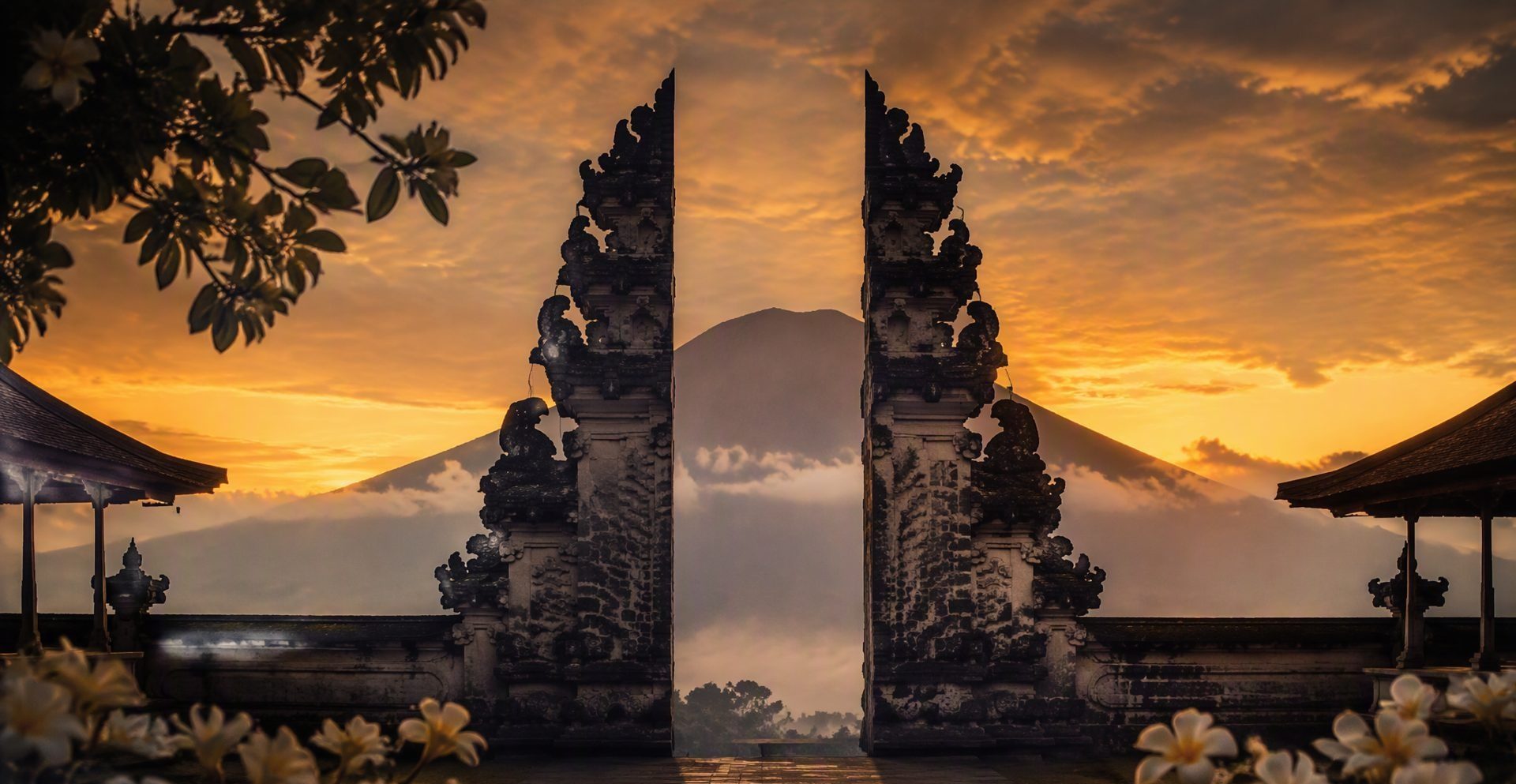
Bali is called the Island of the Gods, and unlike many sacred places on earth, its spirituality is not a museum — it is a morning practice. Every dawn, millions of small woven offerings called canang sari are placed at doorways, shrines and crossroads across the island. Sari means essence. Each one is a thank-you for life itself, renewed not once a year but every single day. In Bali, devotion is not reserved for special occasions. It is the fabric of the ordinary.
The island's guiding philosophy is Tri Hita Karana — the three causes of wellbeing: harmony between humans and the divine (Parahyangan), harmony among people (Pawongan), and harmony with nature (Palemahan). A pilgrimage through Bali does not merely visit this philosophy. It practices it, daily, with the hands and the feet.
Prayer
On the Aurelia pilgrimage, prayer is not recitation — it is intimacy. At Besakih, the Mother Temple on the slopes of Mount Agung, pilgrims receive the blessing of a pemangku, a temple priest: holy water sprinkled, rice grains pressed to the forehead. Before this, Mira guides each pilgrim to find the prayer they have never said out loud. The mountain, it turns out, is a very good listener.
Gratitude
Gratitude on this journey is practiced as a discipline, not a mood. Walking the thousand-year-old rice terraces of Tegalalang, pilgrims learn the subak — the cooperative irrigation system, recognised by UNESCO, that shares water from the crater lakes to every field fairly. Water, like grace, must flow to everyone. Pilgrims speak the names of those who shaped them and offer flowers to the river: gratitude made visible.
Reciprocity
Perhaps the most radical practice of the pilgrimage is giving back. In Sidemen Valley, the circle learns weaving from village artisans, contributes to a local temple fund, and plants trees with farmers. The teaching is simple and confronting: we do not take from this island. We exchange. Reciprocity is what turns a tourist into a pilgrim.
The purification
At the heart of the journey lies melukat — the Balinese water purification ceremony performed at springs like Tirta Empul, where holy water has flowed since 962 AD. Legend says the god Indra struck the earth to revive his poisoned army, and the spring has been washing people clean ever since. Pilgrims move fountain by fountain — body, mind, heart, soul, karma — letting the water carry what they are finally ready to release.
What returns home with you is not a souvenir. It is a nervous system that remembers stillness, a heart that remembers openness, and a daily practice small enough to keep: a flower placed with intention, a breath taken on purpose, a life re-consecrated to what matters.
The Aurelia Bali Pilgrimage is forming now — a small circle of souls, dates to be announced first to those who register their interest. If something in you stirred while reading this, that stirring is the beginning of the walk.