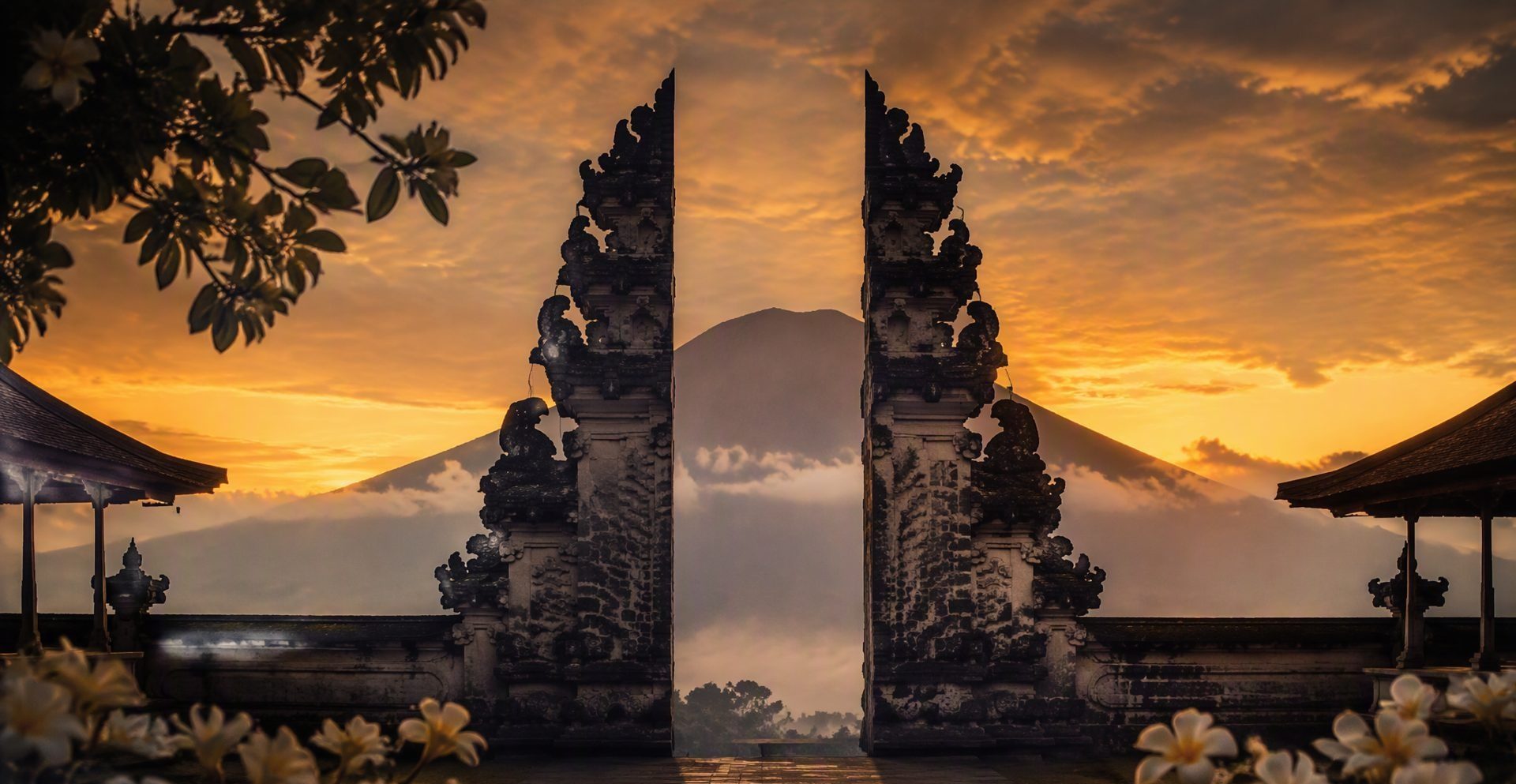
The Gates of Heaven at Pura Lempuyang framing Mount Agung at dawn

The Island of the Gods · Small-Group Soul Journey

The Bali
Pilgrimage

Ten days of prayer, gratitude and reciprocity through Bali's holiest temples, springs and volcanic dawns — where the awakening Mira offers one-on-one becomes a journey we walk together.

Be among the first to answer the call

Why We Walk

The body moves, and the soul catches up.

Pilgrimage is the oldest human technology for transformation. Not tourism — a walking prayer. In Bali, spirituality is not separate from daily life; it is woven into every offering, every doorway, every grain of rice. To walk there slowly, in ceremony, is to remember a way of being human that modern life made us forget.

This journey carries everything Mira offers her one-on-one clients — the heart attunement, the descent practices, the ceremonial containers — and opens it into a small circle of souls, held by an island that has been praying for a thousand years.

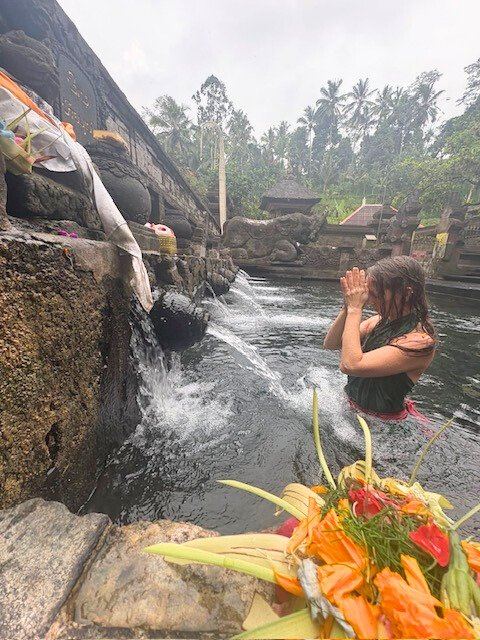
A flower offering at a sacred waterfall

The Sacred Geography

Nine thresholds across one living island

Touch each golden point to meet the site — its story, its practice, and the process Mira will guide you through there.

UbudTirta EmpulGunung Kawi & TegalalangPyramids of ChiSidemen ValleyBesakihMount BaturLempuyang & Tirta GanggaUluwatu

The Island of the Gods · nine thresholds of the journey

Day 3 · Tampaksiring

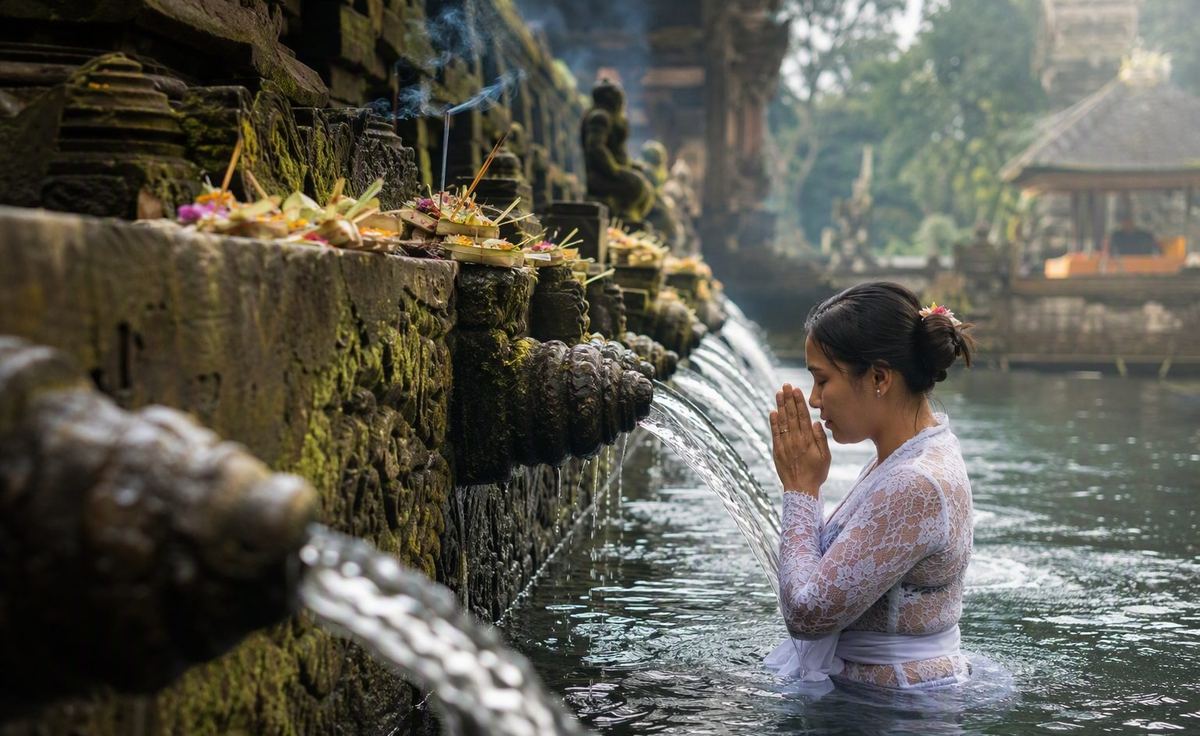
Tirta Empul — The Purification

Melukat — holy water cleansing of body, mind and spirit
Tirta Empul — The Purification

For over a thousand years, since 962 AD, the holy spring of Tirta Empul has flowed without ceasing. Legend tells the god Indra struck the earth to revive his poisoned army — and the water has been washing people clean ever since. Balinese families still travel across the island for melukat, the purification ritual beneath its thirteen fountains.

The Practice

Full melukat ceremony guided by a temple priest: offerings and prayer at the shrine, then moving fountain by fountain — body, mind, heart, soul, karma — letting the spring water carry away what you are ready to release.

Mira's Process

Before entering the water, Mira leads a descent meditation to name — precisely — what each pilgrim is washing clean. After the ritual, the circle integrates in silence beside the spring pond, journaling what surfaced.
The Shape of the Journey

Five movements, ten days

I

Arrive & Root

Days 1–2

Land softly in Ubud, the island's medicine heart. Opening cacao ceremony, canang sari offering-making with local artisans, and Mira's heart-attunement practice to name the intention that will walk with you.

II

Purify & Release

Days 3–5

Melukat purification in the thousand-year springs of Tirta Empul, ancestor prayers at Gunung Kawi, gratitude in the Tegalalang rice terraces, and a full day of sound and stillness inside the Pyramids of Chi.

III

Give & Receive

Days 6–7

Reciprocity in Sidemen Valley — weaving with artisans, planting trees, giving back to the village. Then the ascent of Besakih, the Mother Temple, to offer the prayer you've never said out loud.

IV

Ignite & Cross

Days 8–9

A 2am climb of Mount Batur to claim your becoming in the sunrise, then the Gates of Heaven at Lempuyang — walking the threshold between the life you came with and the one you choose.

V

Integrate & Return

Day 10

Sunset at Uluwatu, the kecak fire chant, and the closing ocean circle. You leave with a personal integration practice, a living altar ritual, and a circle of souls who witnessed your awakening.

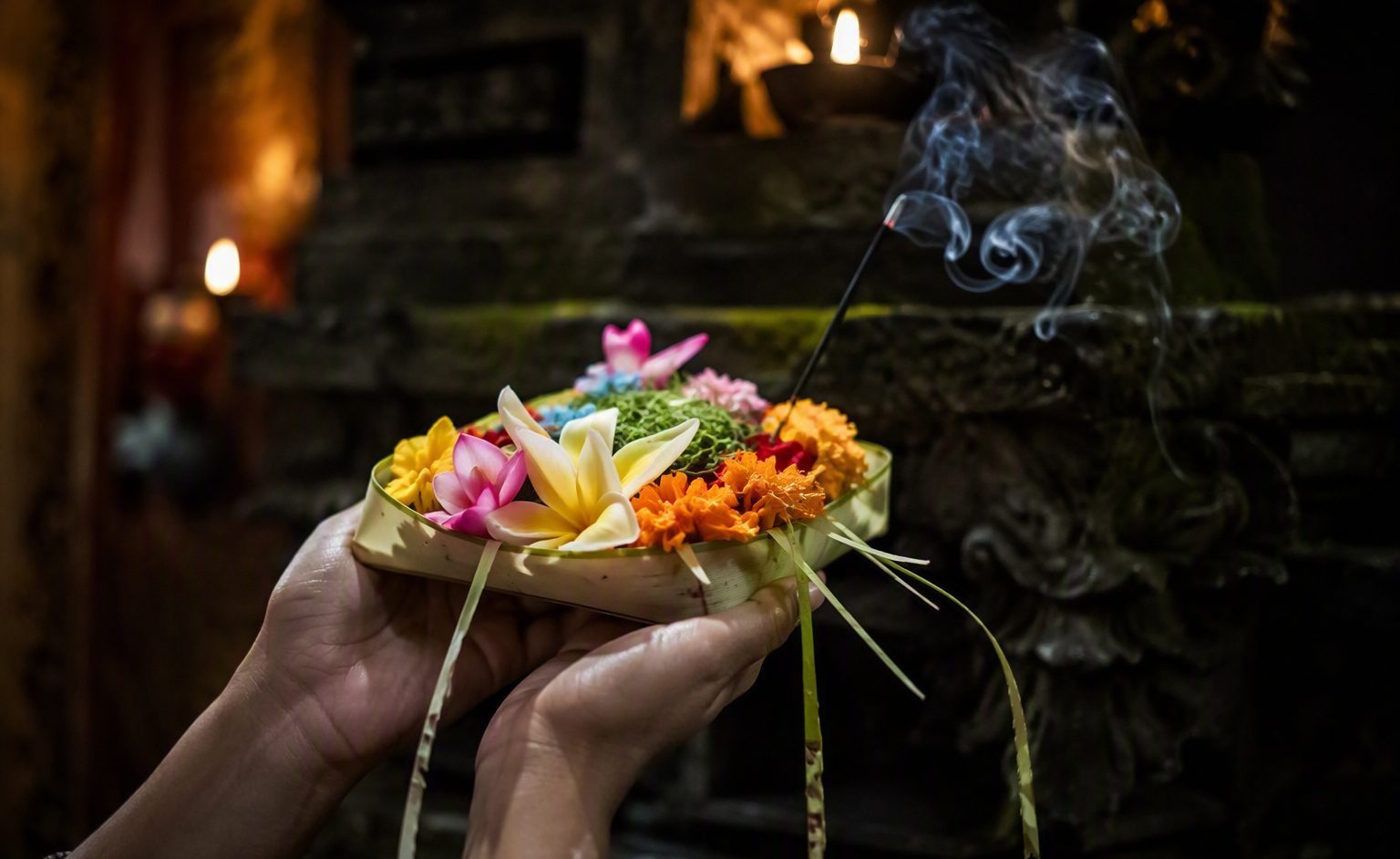
Hands offering a canang sari of flowers and incense

Reciprocity · Tri Hita Karana

We do not take from this island. We exchange.

Every Balinese morning begins with canang sari — a small woven tray of flowers, placed with prayer as a daily thank-you for life itself. Sari means essence. The offering is not about extravagance; it is about intention. Devotion here is not reserved for special occasions — it is renewed every single day.

Our pilgrimage practices this directly: learning offering-making from village artisans, contributing to a Sidemen temple fund, planting trees with local farmers, and walking gently around the offerings on every doorstep — never over them.

Parahyangan — with the Divine

Daily offerings, temple prayer, and ceremony keep the relationship with spirit alive and reciprocal.

Pawongan — with Each Other

Our circle travels as village, not tour group: shared meals, witnessed processes, and giving back to the communities who host us.

Palemahan — with Nature

The springs, volcanoes and rice terraces are teachers, not backdrops. We leave each site cleaner and more loved than we found it.

Questions the Heart Asks

Before you say yes

When does the Bali pilgrimage take place?

Dates are being woven as the circle forms. Rather than fixed calendar dates, Mira is gathering a list of called souls first — when the group reaches its threshold, dates are announced to registered pilgrims before anywhere else. Registering interest is free and carries no obligation.

How many people travel in the group?

Small by design — typically 8 to 12 pilgrims. The depth of one-on-one attention Mira offers her private clients is woven into the group container, and that intimacy is only possible in a small circle.

Do I need to be Hindu or experienced in ceremony to join?

No. Melukat and temple ceremonies are living traditions that welcome sincere visitors of every background. What is required is humility and respect — sarong and sash at temples, moving around (never over) the canang sari offerings, and entering each site with a clear intention. Mira and local guides prepare you for every step.

What is reciprocity, and how is it practiced on this journey?

Reciprocity means the pilgrimage gives back to the land and people who hold it. The circle learns canang sari offering-making from Balinese artisans, contributes to a village temple fund in Sidemen, plants trees with local farmers, and follows Tri Hita Karana — harmony with the divine, with each other, and with nature.

How physically demanding is the pilgrimage?

Most days are gentle walking, ceremony and rest. The one demanding day is the Mount Batur sunrise climb — a 2am start with headlamps, roughly two hours up a volcanic trail at a steady group pace. It is always optional, and a restorative alternative is offered at the caldera hot springs.

What is included, and what does it cost?

The journey is designed to include accommodation, temple entrance and ceremony fees, local guides and priests, ground transport, and most meals. Flights to Bali are your own. Final pricing is shared first with the registered interest list once dates are set.

The circle is forming.

Dates are not yet fixed — they are being woven as the circle gathers. Leave your name and email, and you will be the first to know when the journey is called. No payment, no obligation — only a raised hand.